
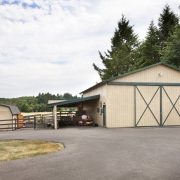
Pole Barn Insulation in Arizona: Protect Agricultural Buildings From Extreme Heat
Arizona pole barns and agricultural buildings face some of the toughest conditions in the country. Intense sunlight, extreme summer temperatures, dust, and large temperature swings can all affect building performance. Therefore, choosing effective pole barn insulation in Arizona can make a significant difference.
Proper insulation helps slow heat transfer through walls and roofing. It can also make agricultural buildings more comfortable and efficient throughout the year. Additionally, the right insulation system can help protect equipment, stored materials, livestock areas, and workspaces.
King Insulation provides commercial and industrial insulation solutions throughout Arizona. With decades of local experience, their team can recommend insulation based on the structure, its use, and the Arizona climate.
Why Pole Barn Insulation in Arizona Matters
Pole barns are popular because they offer flexible, economical space for many agricultural purposes. However, their open layouts and metal components can make temperature control challenging.
Metal roofing and siding can absorb tremendous amounts of solar heat. Consequently, interior temperatures can rise quickly during Arizona summers. An uninsulated agricultural building may become uncomfortable for workers and unsuitable for certain stored products or equipment.
During cooler months, temperatures can also fall rapidly overnight. Insulation helps slow these temperature changes and creates a more stable indoor environment.
For conditioned buildings, better insulation can also reduce the workload placed on heating and cooling equipment. As a result, property owners may lower energy demand while improving overall building comfort.
Agricultural Buildings Have Different Insulation Needs
There is no single insulation system that works for every agricultural property. Instead, the right approach depends heavily on how the building is used.
A machinery storage building may need different insulation than a livestock facility. Likewise, a workshop may have different requirements than a feed storage building or agricultural warehouse.
Common structures that may benefit from pole barn insulation in Arizona include:
- Equipment and machinery storage buildings
- Agricultural warehouses
- Workshops and maintenance buildings
- Livestock and animal housing facilities
- Feed and supply storage structures
- Horse barns and riding facilities
- Farm offices and conditioned workspaces
- Garages and multipurpose outbuildings
Therefore, property owners should consider both current and future building uses before selecting insulation.
Spray Foam Insulation Can Help Seal Agricultural Buildings
Spray foam can be particularly useful for certain pole barns because it expands into gaps and irregular spaces. This creates a more continuous insulating layer.
Additionally, spray foam can help reduce unwanted air movement through cracks and building penetrations. That benefit can become especially important when a pole barn includes conditioned offices, workshops, or storage areas.
King Insulation offers both open-cell and closed-cell spray foam insulation. However, each product has different characteristics. Therefore, material selection should depend on the structure and project requirements.
A professional evaluation can determine whether spray foam is appropriate for the walls, roofline, or other sections of the building.
Fiberglass Offers a Versatile Insulation Option
Fiberglass remains another practical choice for many commercial and agricultural applications.
Fiberglass batt insulation can fit between framing members to create a thermal barrier. Meanwhile, blown-in fiberglass may work well in certain ceilings and other accessible areas.
One advantage of fiberglass is its versatility. It can work for new construction, renovations, and insulation upgrades depending on the building design.
King Insulation provides fiberglass batt and blown-in insulation as part of its commercial and industrial services. Therefore, agricultural property owners can compare several options rather than relying on one material for every project.
Insulation Can Help Protect Working Conditions and Equipment
Temperature control affects more than comfort.
Excessive heat can create difficult working conditions inside agricultural shops, barns, and maintenance buildings. Furthermore, prolonged heat exposure may be undesirable for certain tools, materials, chemicals, or stored products.
Insulating the roof and walls helps reduce the amount of outside heat entering the structure. Consequently, interior temperatures may remain more manageable during the hottest parts of the day.
For buildings with air conditioning, insulation becomes even more valuable. Without an effective thermal barrier, cooled air can escape while outdoor heat continually enters the structure.
Improving the building envelope can therefore support more efficient operation.
Moisture and Condensation Should Also Be Considered
Heat receives most of the attention in Arizona. However, moisture management still matters when insulating metal agricultural buildings.
Temperature differences between indoor air and metal building surfaces can contribute to condensation under certain conditions. Over time, uncontrolled moisture may affect building materials and stored contents.
That is why an insulation project should consider the entire building system rather than simply adding insulation wherever space is available.
King Insulation offers options that include foil and vinyl vapor barriers in addition to several insulation materials. The appropriate combination depends on building construction, ventilation, usage, and environmental conditions.
Insulation Can Make Agricultural Buildings More Versatile
Many pole barns begin as simple storage structures. However, their purpose often changes over time.
A storage barn may eventually become a workshop. Likewise, part of an agricultural warehouse might later become an office or conditioned workspace.
Installing effective pole barn insulation in Arizona can make these buildings easier to adapt. Better thermal control creates opportunities to use the space throughout more of the year.
Moreover, planning insulation during new construction can reduce the difficulty of making upgrades after walls, ceilings, and equipment are installed.
Existing agricultural buildings can also benefit from insulation improvements. The best solution will depend on access, current materials, and the structure’s design.
Choose an Experienced Arizona Insulation Company
Arizona agricultural buildings require insulation strategies designed around desert conditions. Experience with local temperatures, building styles, and commercial applications matters.
King Insulation has provided insulation solutions in Arizona since 1981. Their commercial and industrial team works with property owners, contractors, architects, engineers, HVAC contractors, and other construction professionals.
Their available solutions include fiberglass batt insulation, rock wool, blown-in insulation, rigid insulation, spray foam, radiant barriers, vapor barriers, and additional specialty products.
This range allows King Insulation to recommend an approach based on the actual building rather than forcing every property into the same system.
Improve Your Arizona Agricultural Building With King Insulation
The right pole barn insulation in Arizona can improve temperature control, support energy efficiency, and create a more functional agricultural building. It can also help make workshops, storage facilities, barns, and other structures more usable throughout the year.
Most importantly, the insulation system should match the property’s construction and intended use.
King Insulation brings decades of Arizona commercial and industrial insulation experience to projects of many sizes. Their team can evaluate your agricultural building and recommend insulation designed around your specific goals.
Contact us today to speak with King Insulation about pole barn insulation in Arizona and schedule an evaluation for your agricultural property.


